
To celebrate Hispanic Heritage Month – celebrated every year from Sept. 15 until Oct. 15 – we’re sharing stories from eMoney team members about their own experiences and culture. If you would like to share your story, please email DEILC@emoneyadvisor.com.
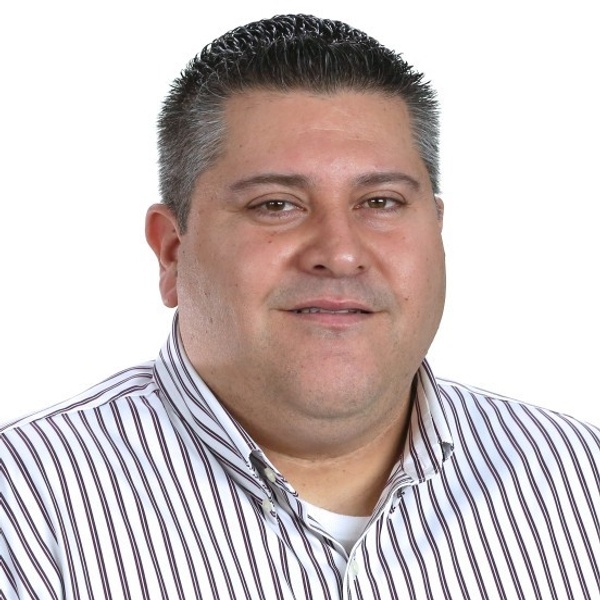
In order to share my story, I feel that I can’t do it without telling you my complete story. My goal is not to turn this into a political debate; rather, my goal is to share my journey because it’s shaped who I am today. I was born into a large family in 1973 in Bogota, Colombia. My mom is one of 11 children, and I have more than 50 cousins – I’m one of the oldest. My family lives around the world; many still live in Colombia, while others live in the U.S., Canada and Spain. (Photos at the end of my story!)
You may have seen a show or movie portraying and, in many cases, glorifying the Colombia of the 70s and 80s – a country in the middle of turmoil and a narco war. That instability, violence and political unrest are what led my family to immigrate to the U.S. in the early 70s. In February 1980, my mom and I left Bogota with two of my aunts and two cousins. They were three Hispanic women in their 20s with three children all under the age of seven, heading north toward the U.S.
The journey was long, often times without a stops for several hours and very little food or water. I was only 6-years-old at the time so I don’t recall all of the journey, but I do recall one specific moment. We had managed to find our way onto a bus that was headed toward Los Angeles, but it first had to get across the U.S./Mexico border. We were to meet a family and stay with them for a few days while we arranged travel to Chicago. While on the bus, the U.S. Customs and Border Patrol stopped the bus and came onboard. My aunts, mom, cousins and I pretended to be asleep, hoping they would leave us alone and not take us. They took a handful of men off the bus but left us alone. God had a plan for us, and continuing our journey was the plan. He was looking out for us that day. We made it to L.A.
We traveled from L.A. to Chicago and arrived at my uncle’s apartment in a small town called Harvard. It felt like I traveled back in time. Harvard wasn’t a city; in fact, at the time it was known as the dairy capital of the U.S. To celebrate, the town put up a full-scale statue of a cow in the center of town. And they would have an annual dairy festival where the cow was almost like the honoree.
We would eventually move to another town closer to Chicago where my mom could more easily find factory jobs and where public transportation was more readily available. Growing up in this new country, it was just my mom and me. The last time I saw my dad was the week before I left Colombia in 1980. I never saw him again, and he has since passed away. For most of my grade school and junior high school years, my mom had to work two jobs. More often than not, that meant I was by myself. My mom and I would get to spend time together early in the mornings before she would go to her first shift job. Some of my favorite memories with my mom were during these mornings. While we only had a short time together, we made it count. I would tell her about my prior day at school; she would tell me about her day at work. We would laugh and share some of the great things we had here in America. For example, we didn’t have a washer or dryer in our house in Colombia, so having laundry facilities in our apartment building was shocking to us. Or the first time we bought a new TV, these were things that growing up in my country during that era only the rich or well-to-do could afford.
I was learning that in America if you worked hard, you could live a much better lifestyle than back home. That’s what we had heard about America. The American dream was real — you just had to work hard and sacrifice. And I’d say the level of sacrificing one goes through as an immigrant is something people never discuss, or I feel even want to see. For example, my mom didn’t see some of her sisters or brothers for more than 20 years. I never again saw my beautiful grandmothers (my dad’s side) smile or went to her chicken coop to get her fresh eggs, or got to simply get her advice or hear her stories. This was before cell phones and just one long distance call was over $100 back then.
My favorite memories took place on Saturdays. My mom spent what she made on living expenses, so we didn’t have money. But every Saturday afternoon we would walk a couple miles to the Burger King. And we had the weekly coupon book that included a buy-one-get-one free deal. With our coupon, we would buy two meals, and my mom and I would sit down and enjoy that meal like we were eating Ruth Chris Steakhouse. We didn’t care, for us it was. When we were done eating, we would walk over to the mall (yes, this was before Amazon when people still went to malls.) We would have some ice cream or dessert, window shop and then walk back home. I learned to be thankful for everything I’ve been blessed with thanks to these experiences. Simplicity sometimes is more fulfilling than a room full of stuff. And I learned that the most important part of a meal is not the food but the company.
Once my mom would leave for work, I would eat breakfast and get ready for school. My mom always made sure I had dinner. She would cook dinners around midnight or 1 a.m. when she came home from her second shift job. So, usually I’d warm up dinner and watch TV after school. Watching TV for me was new. We didn’t watch TV back in Colombia. We only had one in the house, and only grandpa could turn it on. As I recall my early years in the states, TV is how I learned how to speak English. I wanted to learn English so badly that I would eagerly sit down to watch shows like Different Strokes, Threes Company, Growing Pains and Family Ties.
I began my education in the U.S. public school system as a repeat first-grader. This was certainly different to me – I came from a Catholic school and I only spoke Spanish. Keep in mind this was 1980 before ESL programs were available to help children whose second language was English. In fact, at the end of my first-grade year, I was held back to do first grade for a third time. It was devastating. My mom could see how much stress this was putting on me, but there was nothing she could really do. She was dealing with her own issues. It was early on where she encountered a combination of racism and sexism. My mom was a 28-year-old Hispanic woman who spoke no English and barely had a high school education, which led certain people to attempt to take advantage of her situation.
I have memories of us in the grocery store, restaurant or retail store where people openly made fun of my mom’s thick accent. I remember a man looking at us in line at a grocery store and telling my mom, “You’re in America. Learn English, you stupid sp*c.” I had no idea what that man had just said to us, but I knew it was an insult. I looked at my mom. She ignored him, but when we got outside she began to tear up, and I could tell she was just mentally exhausted. She is a proud, strong woman, and she knew that she had to “suck it up and eat it.”
As I grew up, I quickly learned how much racism my mom had dealt with all those years. There was another time when I was in junior high on the pay phone speaking to my mom. A kid stopped and yelled out a racial slur toward me. Let’s just say that phone stopped working, and I had a small vacation at home.
I know we like to believe that those are the days of the past, but just a couple of years ago when I first moved to Pennsylvania, I had a similar experience. We had moved across the country, but all of our personal belongings were stored back in Seattle. While we figured out where we would ultimately settle, I decided to purchase a small dining room table with chairs. My teenage daughter and I got in our truck to go pick it up. Once we arrived, we went upstairs to grab the table and chairs. While in the elevator on the way down, the man I was purchasing it from looked at me and, without a second thought, says, “Hey, so where are your papers?”
I wish I could say I was surprised, but I wasn’t. I was upset at the fact that my daughter had to see and experience how easily people can look at you and diminish you based on your ethnicity. But I was glad she got to experience that with me, so we could talk about it and learn from it. It was an opportunity for me to reinforce to my daughter to always be proud of her Hispanic heritage of being Colombian/Puerto Rican regardless of misguided people. It was an opportunity to let her know how lucky she is to have been born in this country. And to never forget her grandmother’s sacrifices and how a single 28-year-old woman came to this country with nothing, and 40 years later had raised three children — all college grads and well into their careers. Her grandmother broke our family’s cycle of poverty, and no racist can take that away from her.
My culture and heritage play such a large role in my life. I’m proud to have been born in Colombia, to come from such a beautiful country with such a rich history. I make it a point to go back and visit family every few years. My beautiful grandma who always called me her “hijito” (her baby boy if you will) had such an impact on my learnings of my family heritage. Now that said, I’m extremely proud to be an American citizen and to live in a country that has literally changed my family’s trajectory for generations to come. I feel like I’ve won the “country” lotto having the privilege to be a part of two amazing countries and calling them both my homes.
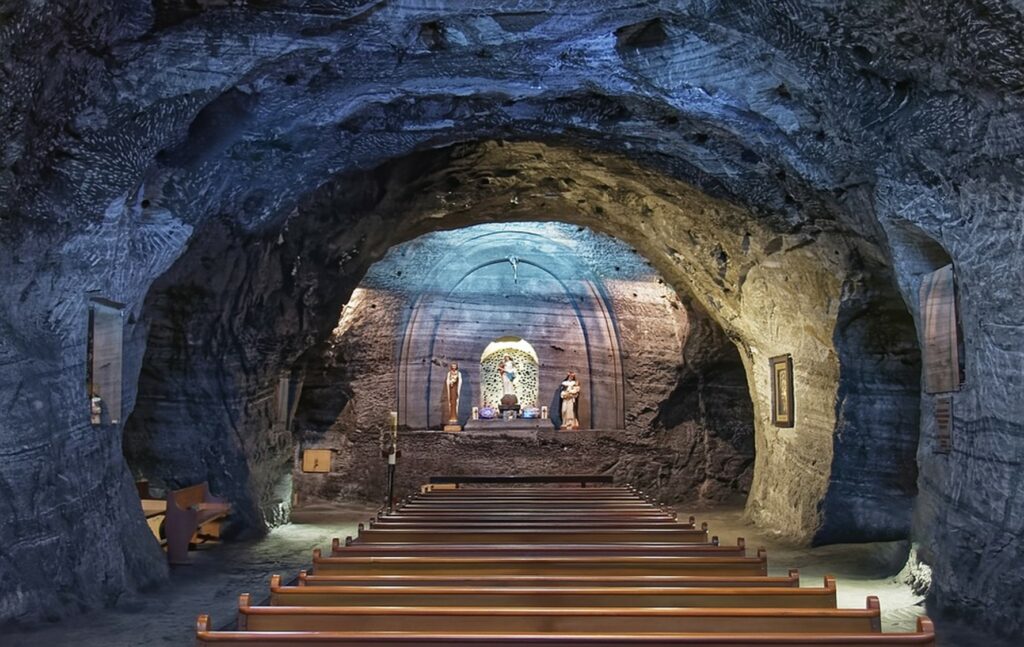
My family beginnings can be traced back to our ancestors in a small city approximately 30 miles north of Bogota called Zipaquirá – founded in July 1600. It’s a beautiful, small city most famously known for its Salt Cathedral, considered the First Wonder of Colombia. It is truly an architectural gem. The Salt Cathedral is located on the hill of Zipa (named for the most important indigenous chief) and it descends 600 feet into the ground.
Did you know that Colombia is the second most biodiverse country in the world (Brazil is #1)? In fact, Colombia is only one of 17 countries in the world classified as megadiverse. One out of every 10 species in the world can be found in Colombia! It is #1 in Emerald Exportation producing up to 90% of the world’s emeralds. It’s #2 in flower exportation; its coffee is the third most consumed in the world, and it’s often voted one of the happiest countries in the world. (It does have 18 national holidays, second only to India. I’m sure that helps 😉)
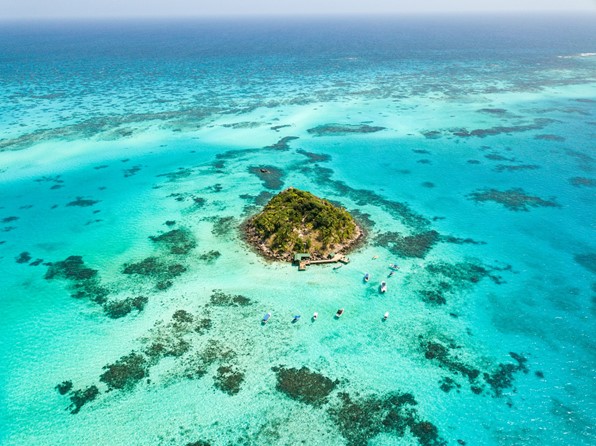
Do you enjoy snorkeling or diving? Then you’ll love Colombia. The Colombian islands of Providencia and Santa Catalina provide access to the third largest coral reef system on Earth.
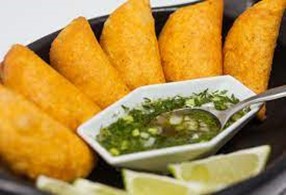
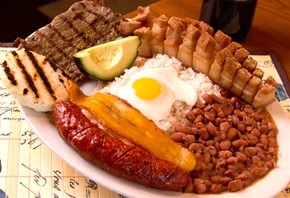
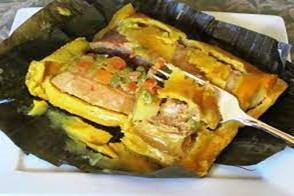
Now if you love food, you’ll love Colombia. Some of my favorite memories center around family parties or special family occasions. Among some of my favorite traditional Colombian dishes are empanadas, tamales, arroz con pollo, and, of course, Bandeja Paisa.

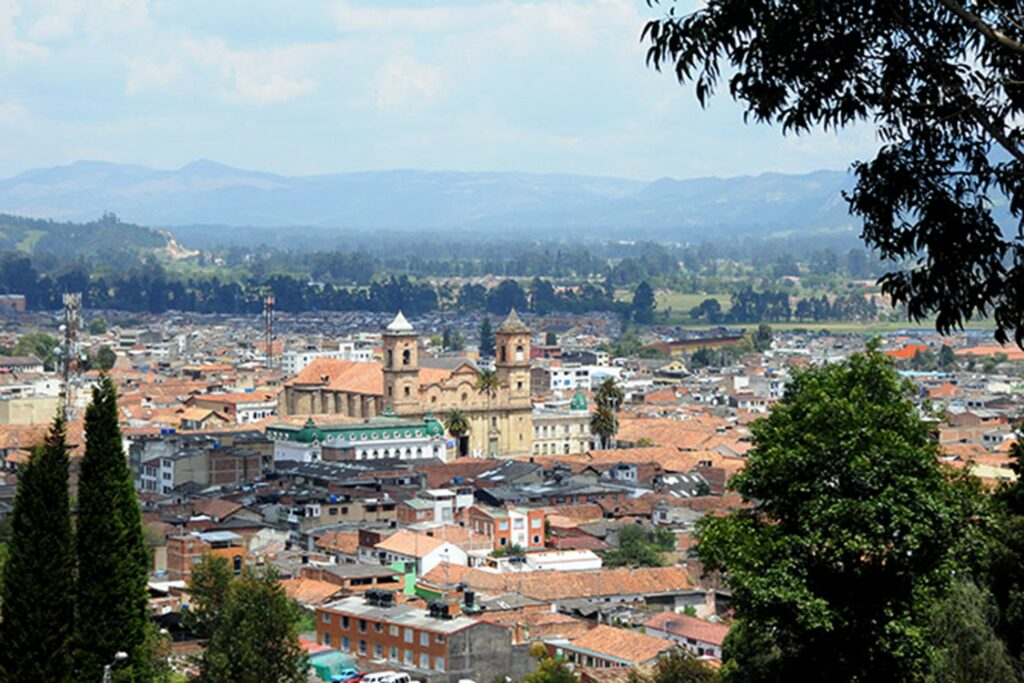
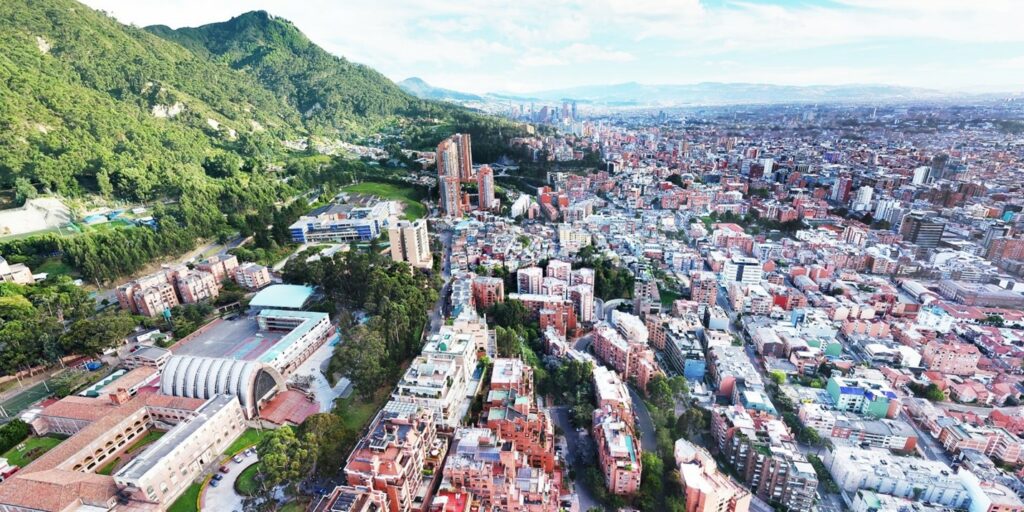
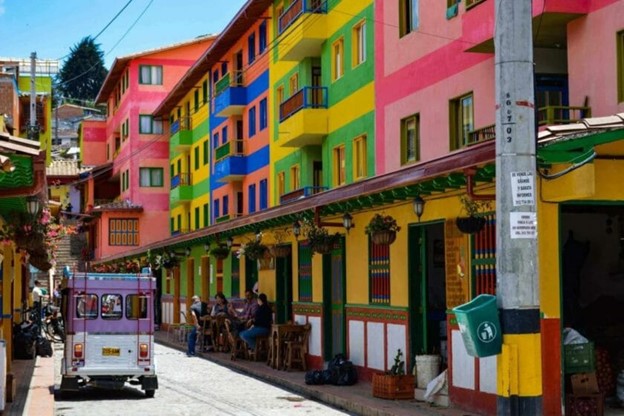




Thank you for sharing such a personal side of your story and not shying away from the truth of it. I feel privileged to have had the opportunity to see it through your eyes.