
As part of Growth Week, we asked a few Leadership Team members to share their perspective on learning, innovation, and growth.
Here’s what they had to say.
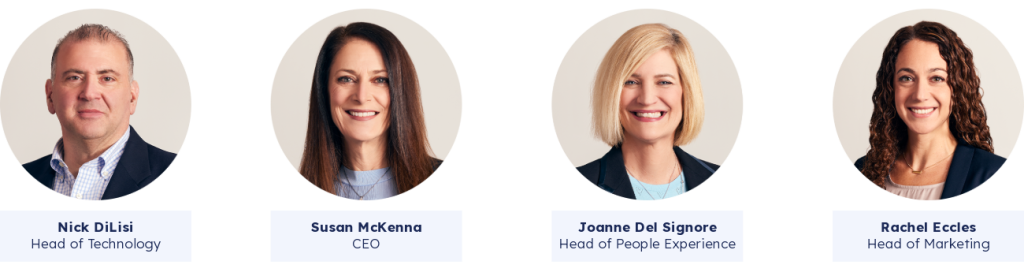
Continuous learning doesn’t always come from formal training. Often, it comes from staying curious and being open to learning from those around us.
For Susan, growth starts with understanding the people and perspectives around you.
“Empathy and understand the people around you – your employees, clients, and stakeholders – is critical. Taking the time to understand different points of view helps you make more informed and thoughtful decisions.”
For Joanne, one of the most important habits for continued growth is simply listening.
“As leaders, it can be easy to assume we have the answers, but some of my best learning has come from listening to my team, peers, and employees across the organization. I’ve found that intentionally seeking out perspectives different from my own and staying open to learning from others has helped me grow throughout my career.”
Nick’s approach is rooted in curiosity and hands-on learning.
“I’ve always been naturally curious and tend to learn best by experiencing things for myself. Whether it’s figuring out how something works or learning through everyday problem-solving, I enjoy exploring new ideas and learning by doing — even if that sometimes starts with watching a YouTube video to understand how something works.”
And when it comes to content influencing his thinking lately, Nick recently recommended Rewired: McKinsey’s Playbook on How Leading Companies Win with Technology and AI Rewired
While every leader has a different perspective, one theme stood out consistently: strong leadership starts with curiosity, empathy, and supporting others.
Susan believes leadership is rooted in communication, trust, and authenticity.
“To be a successful leader, strong communication skills, positive energy, and a sense of humor go a long way. Authenticity beats perfection – people connect with leaders who show up as themselves.”
Joanne believes great leaders lead with curiosity, self-awareness, and a commitment to helping others succeed.
“Leadership is about dedication, curiosity, and self-awareness. The people who stand out are those who actively seek different perspectives, focus on helping others succeed, and create environments where people feel empowered to do their best work. Great leaders focus on solutions, build trust, and collaborate across teams to move the organization forward.”
For Rachel, communication and empathy are foundational leadership skills.
“One of the most important qualities a successful leader can have is the ability to communicate effectively with different stakeholders, understand different perspectives, and turn those insights into thoughtful recommendations that support what’s best for the business. Empathy, intellectual curiosity, and strong listening skills all play a huge role.”
Nick believes leadership starts with people.
“I think great leadership starts with listening to people and supporting the people around you. Helping others succeed is one of the most important parts of leading any organization.”
Innovation doesn’t only happen during big breakthroughs – often, it starts by creating environments where people feel comfortable sharing ideas and experimenting.
Susan believes innovation happens when leaders empower others and create space for teams to execute.
“As a leader, you can’t be the one tactically executing everything. You have to focus on strategy while trusting others to execute and empowering teams to do great work.”
Rachel believes innovation can come from anywhere in the organization.
“Some of the best ideas come from the most unexpected places. I strongly believe people need to feel comfortable speaking up, challenging ideas, pitching new concepts, and exploring new ways of thinking. When teams feel safe sharing perspectives openly and collaborating to bring ideas to life, really exciting things can happen.”
For Nick, innovation needs to become part of everyday work.
“Innovation works best when it becomes part of what people do every day. It’s important not only to provide people with the right tools, but also the time and support needed to explore new ways of working and thinking.”
Career growth isn’t always linear – setbacks and uncertainty are often where the biggest lessons happen.
Susan believes growth as a leader often comes from navigating difficult decisions and staying focused on what’s best for the business.
“Soon after I was named CEO at eMoney, the future of a product many people worked tirelessly on building, launching, and marketing was in my hands. While there were many factors at play, I knew making the decision to sunset the product was the right move for the business.”
Joanne focuses on staying grounded in what she can control.
“When facing uncertainty, I’ve learned to focus on what I can control. Gathering information, seeking input from others, and avoiding assumptions can make all the difference. Leadership isn’t about having all the answers – it’s about leaning on your team, creating space for ideas, removing obstacles, and moving forward together. During uncertain times, transparency, communication, and trust become even more important.”
Rachel approaches setbacks by focusing on adaptability and the bigger picture.
“Setbacks are simply part of doing business. It’s okay to feel disappointed when things don’t go as planned, but I always try to step back and ask what we’re ultimately trying to accomplish and why things didn’t go according to plan. There’s usually more than one way to solve a problem, and sometimes the adjusted path can lead to an even better outcome than the original plan.”
Nick focuses on learning and staying optimistic.
“Setbacks don’t tend to discourage me – I try to learn as much as I can from every situation and stay focused on the bigger picture. Uncertainty is part of life, and I believe there’s almost always an opportunity to make the best of difficult situations and find something positive to take away.”


Leave a Reply