
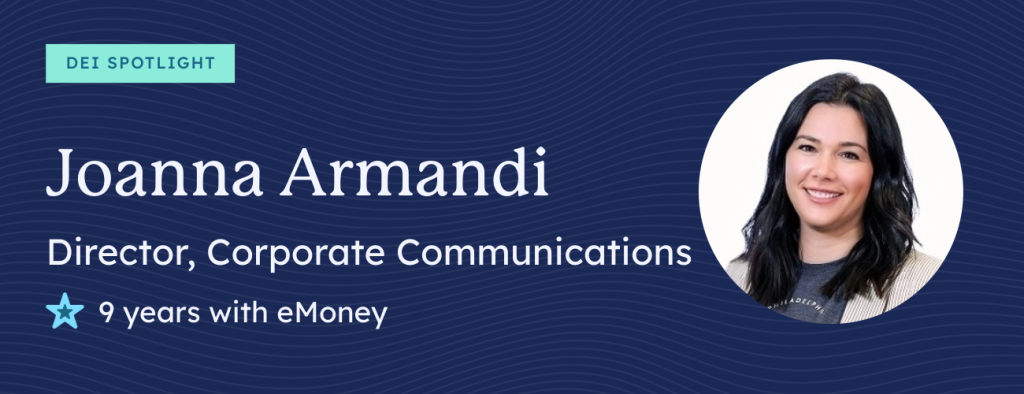
What does diversity, equality, and inclusion mean to you?
Understanding and embracing that our differences — especially in the workplace — fuel innovation and lead to stronger teams. Ensuring that one singular viewpoint is not taken as the gold standard. Fostering an environment where people can show up as their full selves to do their best work.
How would you like to see eMoney’s DEI efforts grow or evolve?
I hope that our vision – financial peace of mind for all — gains more visibility and continues to be integrated into all we do. It’s more important now than ever before as we see the advice market changing.
What impact do you hope DEI will have on our culture long term?
That employees (past, present, future) realize eMoney is not like other companies in the best ways possible.
Can you share a story that shaped your perspective on DEI?
In a former role, I was interviewing a colleague for a company profile. She was a medical doctor who happened to be a gay, Black woman. She explained to me that at previous companies she felt like she had to hide parts of who she was, fearing they would impact relationships or even the safety of her job. She detailed how exhausting it was working in an environment where she felt pressured to conceal parts of her identity. Questions like “How was your weekend?” caused so much stress. I realized my privilege in that moment and gained much more awareness of and compassion toward the invisible battles people in historically excluded and marginalized groups face – even in a corporate setting.
How do you think DEI contributes to business success?
Enabling people to rely on their unique experience, talents and skills leads to new ideas, process improvement and defeating the status quo. Having different voices and perspectives at the table is critical for any business to thrive. Additionally, look at eMoney’s product strategy that focuses on providing full-spectrum planning solutions. I’d say the decision to develop tools that deliver more than ‘advanced planning’ has been a huge factor in our success.
Do you have any examples that you can share where diversity helped spark innovation or solve a business challenge?
I forget the specific project at hand, but a colleague consistently referenced how things were under a former leader. I had to explain that me having no knowledge of that time (since I had joined the company later) was actually a good thing because it gave me a different perspective. I was finally able to work on the project without the obligation of honoring a past marker of success.
Can you recommend any books, podcasts, articles, documentaries, or other resources that helped you expand your outlook and understanding about DEI?
“White Privilege: Unpacking the Invisible Knapsack” an essay by Peggy McIntosh. It’s from 1989 but still relevant in outlining the things that many people take for granted and don’t recognize as privilege.


Leave a Reply